

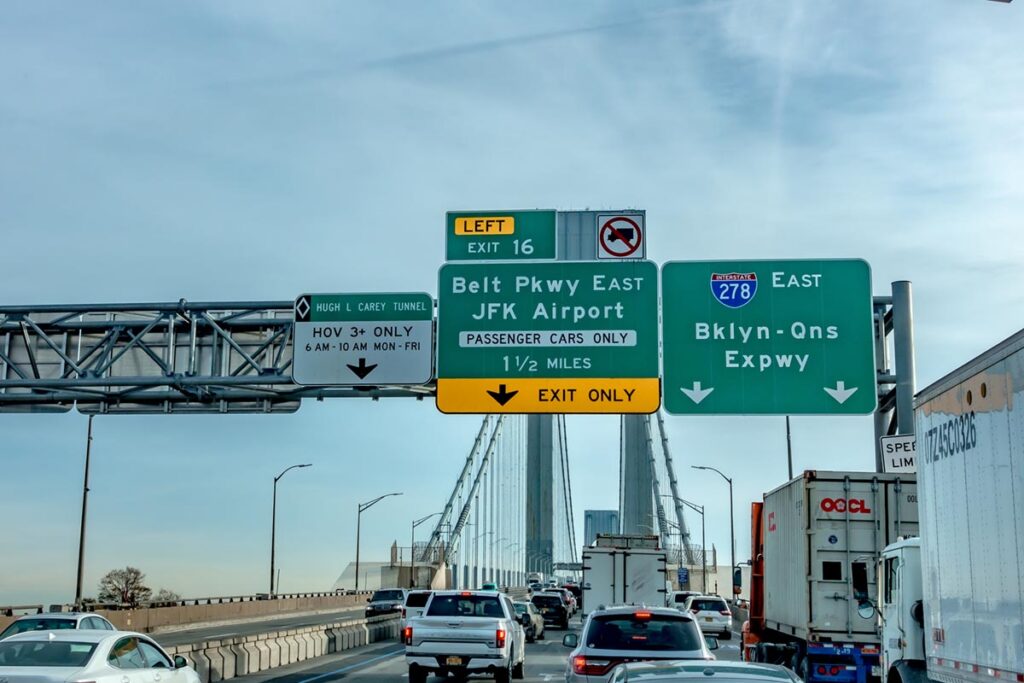
Ask anyone who’s tried to catch a flight out of La Guardia, Newark, or JFK at rush hour, there is a particular kind of frustration that defines travel out of New York. The slow, grinding, unpredictable crawl between the city and the airport. The limo that idles in traffic. The clock that moves faster than the black car. Often, the most frustrating part of modern air travel is covering the distance from downtown to the terminal.
A New Era In Commuter Aviation
Last week, we got a glimpse of a technology that promises to change all that.
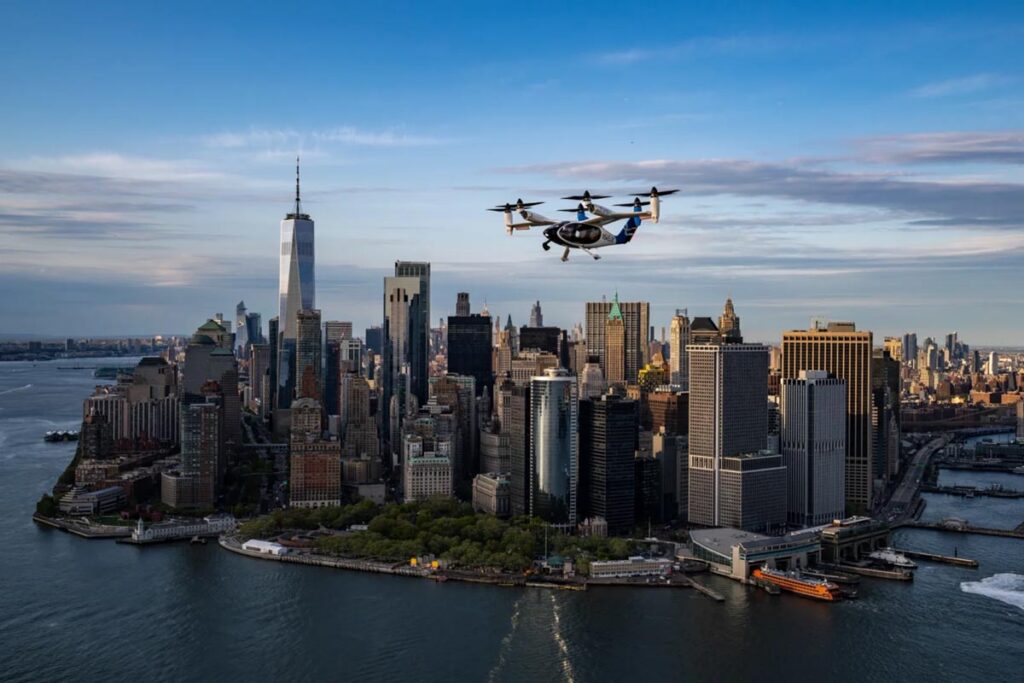
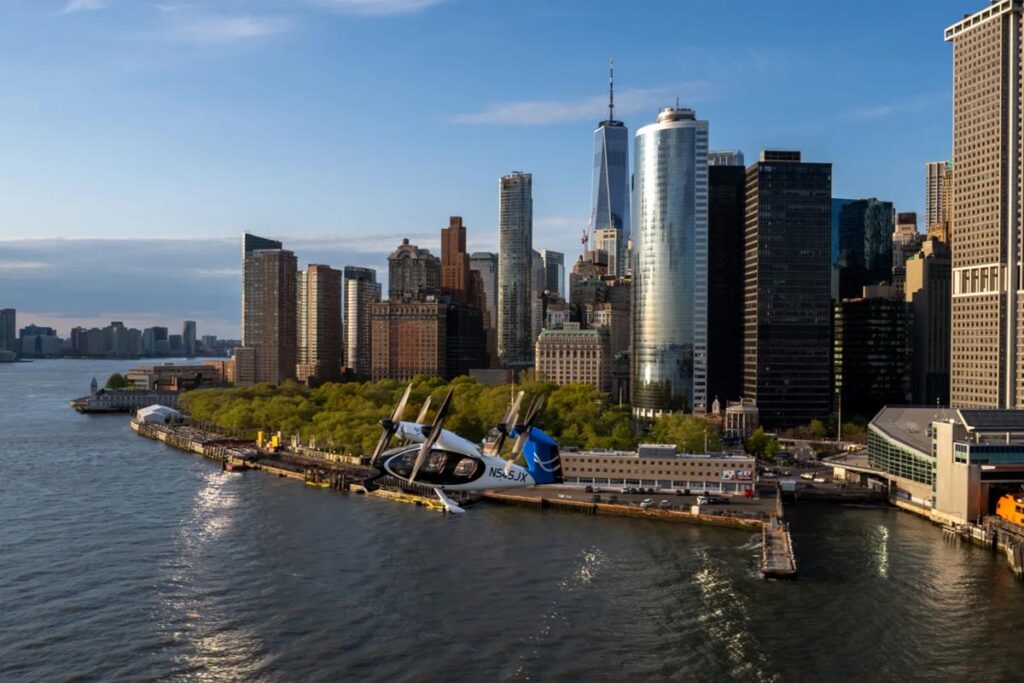
Joby Aviation brought its all-electric vertical takeoff and landing (eVTOL) aircraft to New York for a week-long series of demonstration flights, operating between John F. Kennedy International Airport and Manhattan heliports in coordination with the Port Authority of New York and New Jersey. It was the first time fully electric, point-to-point air taxi flights had been conducted in the city. According to Port Authority Chairman Kevin O’Toole, “These flights advance our work to determine how next-generation aviation technology can serve the people of New York and New Jersey.”
Not Quite a Helicopter, and That’s the Point
The instinct is to compare Joby’s aircraft to a helicopter. It lifts off vertically, it hovers, it lands in compact spaces, and it completes the trip in about the same time as helicopters that currently shuttle passengers to JFK. But the similarities end quickly.
The aircraft uses multiple electric propellers and transitions into forward flight like a fixed-wing airplane. The result is something quieter, more stable, and designed for repetition rather than spectacle. Joby’s eVTOL aircraft operates at a fraction of the noise of a helicopter. While there is environmental impact involved in charging the batteries, because it doesn’t burn aviation fuel, there are no tailpipe emissions.
Taking Advantage of Existing Infrastructure
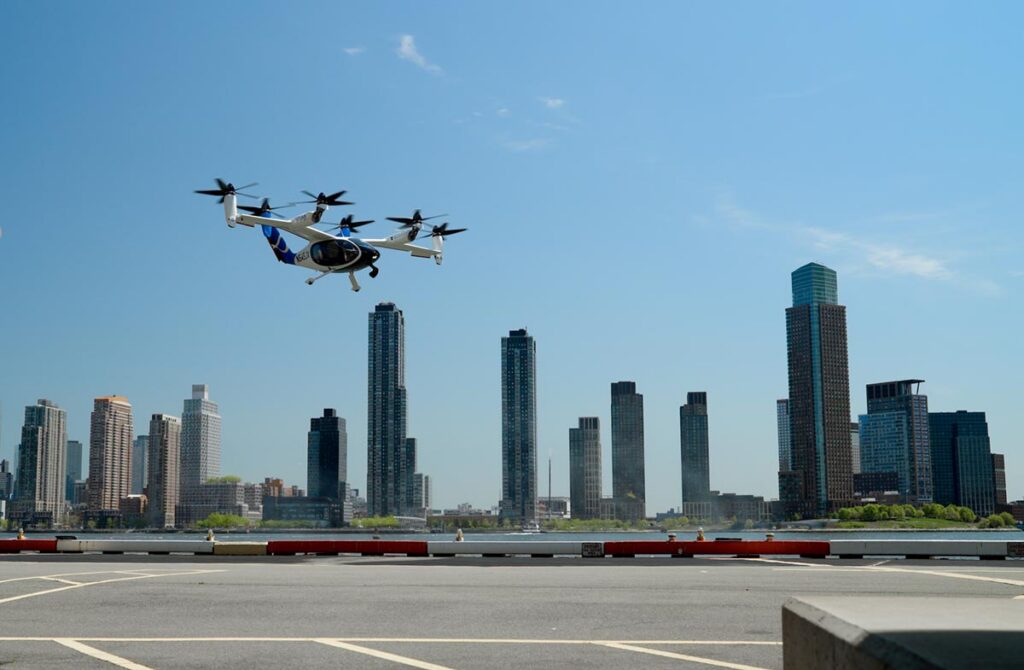
Perhaps the most telling aspect of the New York flights is how little had to change for them to happen. The city did not build new landing sites. It used the heliports it already has.
This matters because infrastructure, not technology, is often the limiting factor in transportation innovation. High-speed rail in the United States remains more aspiration than reality largely because of the cost and complexity of building new corridors. By contrast, urban air mobility can, at least initially, borrow from what exists. Joby has also positioned itself within an existing ecosystem. Its acquisition of passenger operations from Blade Air Mobility provides access to both infrastructure and a customer base already accustomed to flying short distances over traffic.
Adding A New Layer To The Ecosystem
The most useful way to think about Joby’s New York flights is not as a replacement for existing transportation, but as an addition to it. Cities are systems of layers. Walking, driving, rail, and air all coexist, each serving different needs. Electric VTOL aircraft introduce a new layer, one optimized for short distances, high value, and time sensitivity.
The cost is expected to be similar to that of a premium car service and the company is working with the FAA to attain all regulatory approvals with the hope to begin public flights in 2027.
In transportation, new technology often succeeds not because it changes behavior, but because it fits seamlessly into existing routines. And that’s the course Joby seems to be plotting.